Home › Commercial Concrete Repair and Restoration
We handle commercial concrete repair and restoration in Cleveland, OH for warehouses, plants, parking lots, and sidewalks. Our services include joint repair, patching, overlays, and trip hazard removal. Restore safety and extend the life of your commercial concrete without full replacement when possible.
Superior Concrete Cleveland provides professional commercial concrete repair throughout Cleveland, OH, Ohio and the surrounding area. Our licensed, insured crew delivers safe, clean, on-time work with a free estimate before anything begins. Call (216) 677-5617 or request your free quote.
Commercial Concrete Repair for Cleveland Properties
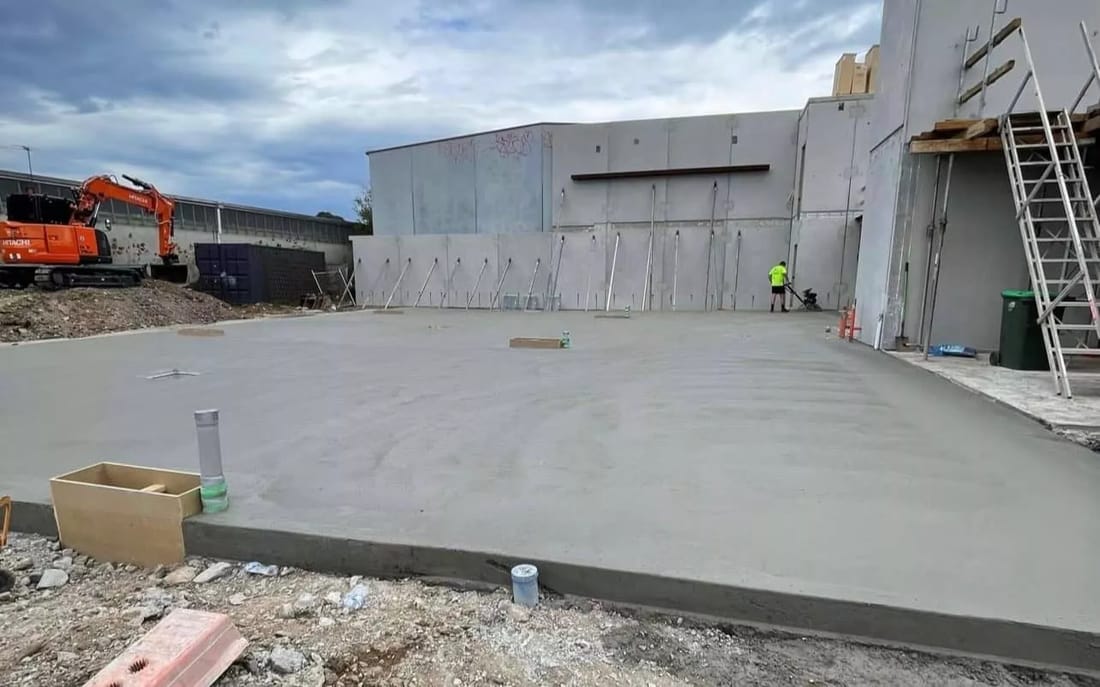
Commercial concrete repair is rarely one-size-fits-all, especially in Cleveland where freeze-thaw cycles, road salt, and older building stock all work against your slabs. Superior Concrete Cleveland focuses on practical, long-lasting repairs for facilities that need to stay open, including warehouses along the lakefront, office parks in Independence, retail centers in Parma, and industrial sites in the Flats.
On this type of project, our first step is a detailed condition assessment, not a quick walk-through. We look for structural cracking, delamination, scaling, settlement, joint failure, corrosion staining, and drainage problems. For interior slabs we check for slab curling and vapor issues. For exterior loading docks, sidewalks, and parking areas we pay close attention to salt damage and heaving from winter conditions. We document everything with photos and measurements so you know exactly what is happening to your concrete and what needs to be prioritized.
The goal is always to stabilize the structure, remove active deterioration, and restore safe, clean surfaces without overbuilding or overcharging. Sometimes that means a targeted concrete repair instead of full replacement. Other times we will tell you plainly that replacement is the responsible choice if the slab or structural member has lost too much section or is moving excessively.
How We Actually Repair Commercial Concrete
Commercial concrete repair has a defined sequence, and cutting corners at any step usually leads to failures in our climate. Once Superior Concrete Cleveland finishes the condition assessment and you approve a proposal, we start with access and safety planning, especially important for active businesses downtown or along high-traffic corridors like Euclid and Carnegie. We set up barriers, schedule noisy work around your operations, and protect adjacent surfaces from dust and debris.
Surface preparation is critical. For patching and restoration, we mechanically remove unsound concrete by chipping or grinding back to solid material, often using dust-controlled equipment so your tenants or production lines are not impacted. Exposed reinforcing steel is cleaned to bare metal, evaluated for section loss, and either coated with a corrosion inhibitor or supplemented with new steel if required.
Patching uses repair mortars or concrete mixes matched to the original substrate. For deeper structural repairs, we use high-strength, low-shrinkage repair concrete. For overhead repairs to beams or parking deck soffits, we select lightweight, polymer-modified materials that adhere well and do not sag. We form, place, and cure the repair so the new material bonds monolithically to the existing structure, not just sitting as a cosmetic patch.
For slabs with trip hazards or drainage problems, we may use slab grinding to remove lip edges, or slab jacking and polyurethane foam injection to re-level settled panels. Joints are cleaned, re-cut if needed, and re-sealed with commercial-grade sealants to keep water and de-icing chemicals out. Where corrosion is a known issue, we can install galvanic anodes in strategic locations to slow down future steel deterioration.
Restoration: Extending the Life of Aging Concrete
Many commercial properties in the Cleveland area date from the 1950s through the 1980s, including manufacturing buildings and multi-level parking structures. These structures often have sound cores but deteriorated surfaces from decades of salt, moisture, and heavy use. Superior Concrete Cleveland focuses on restoration that extends the useful life of these assets without full reconstruction.
For parking garages, plazas, and balconies, we often perform partial-depth and full-depth slab repairs combined with new traffic-bearing coatings. This involves removing deteriorated concrete, repairing reinforcing steel, re-pouring the slab sections, then applying elastomeric or epoxy-urethane coatings that resist salt and water. Proper detailing at drains and joints is key so water is directed away from critical areas.
On warehouse and industrial floors, restoration might focus on impact damage from forklifts, joint deterioration that creates hard bumps for lift trucks, or surface dusting that creates air quality and housekeeping issues. We can perform joint rebuilds, surface densification, and selective replacement of badly broken panels. Where chemical exposure is an issue, such as in food processing or light manufacturing, we can grind and resurface with chemical-resistant toppings.
Exterior stairs, loading docks, and ADA ramps are common restoration targets around Cleveland office and retail properties. Instead of tearing everything out, we often repair spalled treads and landings, reset or replace nosings, rebuild failed curbs, correct slope for drainage, and then apply non-slip surface treatments that stand up to winter conditions and foot traffic.
What Drives Cost for Commercial Concrete Repair
Property managers and owners usually want to understand what actually controls cost before committing to commercial concrete repair. Superior Concrete Cleveland breaks costs into several concrete factors so you can see where your budget is going.
Extent and depth of damage is the largest driver. A surface spall in a loading area that needs a 1 inch patch is relatively inexpensive. Wide structural cracks, rebar corrosion with concrete delamination, or deep slab settlement that requires injection or replacement will increase time and material. We measure and quantify these areas so you get realistic pricing, not guesses.
Access and phasing also matter in Cleveland, where many commercial properties operate 6 or 7 days a week. Repairing a parking deck in downtown Cleveland or along the HealthLine corridor often requires phased work to keep part of the deck open. Night or weekend work, tight spaces that need more hand work instead of machines, or work above active spaces (like garage ceilings below offices) all add complexity and labor.
Material selection influences cost but also affects long-term value. High-performance repair mortars, corrosion inhibitors, and traffic coatings cost more upfront but often extend service life significantly, especially where road salt and freeze-thaw cycles are constant threats. We typically present at least two options, such as a short-term repair to get 3 to 5 more years versus a more comprehensive restoration that can add 10 years or more.
Finally, site conditions like drainage problems, inadequate joints, or missing sealers can make repair alone a bandage if they are not corrected. When we propose addressing these root causes, it may raise the contract price slightly but usually reduces your long-term spend on repeated repairs.
Planning Around Cleveland Weather and Operations
Timing is critical in commercial concrete repair, particularly in Northeast Ohio. Superior Concrete Cleveland schedules and sequences work so repairs cure correctly and your operations are disrupted as little as possible.
Exterior concrete repair is best performed from late spring through early fall, when temperatures are within the ideal range for curing and sudden freezes are less likely. In Cleveland, that typically means April through October, though we can perform cold-weather work when needed using heated enclosures, cold-weather admixtures, and extended cure times. We will tell you clearly if conditions are likely to compromise quality, rather than rushing a job to fit a date.
For businesses that cannot shut down, such as distribution centers in Brooklyn Heights or medical facilities near University Circle, we often phase projects by zone. We may repair half a loading dock at a time, alternate parking levels, or coordinate interior slab repairs with your least-busy shifts. Night and weekend work can be arranged when it reduces impact on patients, customers, or production.
We also plan for dust, noise, and access. Grinding and chipping work is scheduled to minimize disturbance to offices and retail tenants. Dust-control equipment and plastic barriers limit spread into occupied areas. Clear signage and temporary striping guide traffic around work zones so customers, staff, and delivery drivers can still move safely through your property while restoration is underway.
What Cleveland Owners Should Ask Before Hiring
A commercial concrete repair project is not the place to choose a contractor on price alone. Superior Concrete Cleveland encourages every owner or manager to ask some specific questions before hiring anyone, including us.
Ask what investigation methods they use. If a contractor proposes a major repair or replacement without measuring delaminations, sounding concrete, or evaluating rebar condition, they are guessing. Responsible repair work starts with understanding the cause of damage, not just what it looks like on the surface.
Ask for project examples that match your property type and age. Repairing a 1960s precast parking deck on the East Side is very different from patching a 1990s slab-on-grade in a distribution center. You want a contractor who can talk specifically about issues like chloride contamination, existing coatings, and joint details that are typical of your era of construction.
Confirm how they will protect building occupants and keep you in operation. That means dust control, access planning, phasing, and communication. You should receive a clear schedule, an explanation of noisy or disruptive phases, and a single point of contact who can update you if weather or site conditions force changes.
Finally, ask about long-term protection. A thorough commercial concrete repair plan for a Cleveland property should address sealing, coatings, joint maintenance, drainage, and realistic inspection intervals. Our approach is to leave you with a repair and maintenance plan you can budget around, instead of surprise failures.
If you are responsible for a commercial property in Cleveland or the surrounding suburbs and need concrete repaired or restored, Superior Concrete Cleveland is available to assess the condition, explain your options in plain terms, and provide a detailed plan aimed at both safety and service life, not just short-term appearance.